
Tag: Membership

  • Peace and Purity: Why the Church Cannot Have One Without the Other

    Peace and Purity: Why the Church Cannot Have One Without the Other

    In the EPC, every new member makes a simple but weighty promise: “Do you promise to promote the unity, peace, and purity of the church?” It’s easy to treat unity, peace and purity as three separate directions—as though we could prioritize one without jeopardizing the other. But Scripture and the Reformed tradition (especially the Westminster Standards) insist that peace flows from purity, not the other way around. Lose purity, and you lose peace. Seek peace at the expense of purity, and you get neither.

    Biblical Peace is the Fruit of Truth, Not the Absence of Conflict

    “Peace” in Scripture is not about absence of conflict. It is shalom—order, wholeness, integrity. And this cannot exist apart from truth. Jesus prayed, “Sanctify them in the truth; Your Word is truth” (John 17:17). Paul joins peace and purity repeatedly (2 Tim. 1:13; Titus 2:1–2). The early church enjoyed deep unity after anchoring themselves in “’the apostles’ teaching” (Acts 2:42–47). The Westminster Confession agrees: the church’s holiness and peace are a mark of the Spirit’s work, not human diplomacy.

    The purest Churches under heaven are subject both to mixture and error…(WCF 25.5)

    Purity is not perfection (though Christ will eventually perfect his Bride)—but it is the sincere pursuit of doctrinal and moral faithfulness. And this pursuit is what guards the church’s peace.

    Pursuing Peace at the Expense of Purity Always Harms the Flock

    Many churches avoid conflict by refusing to confront false teaching or unrepentant sin. That instinct feels peaceful and mercy-filled, but Scripture calls it dangerous. Paul warns that wolves will come “from among your own selves” (Acts 20:29–30). In 1 Corinthians 5:6-7 we read, “Do you not know that a little leaven leavens the whole lump? Cleanse out the old leaven…” In Ephesians he writes, “There must not even be a hint of impurity among you” (Eph. 5:3). Paul’s instruction is to guard the flock and address impurity within the church. This is accomplished through discipline. The Confession recognizes discipline as a means of grace:

    Church censures are necessary for reclaiming and gaining of offending brethren, for deterring of others… and for preventing the wrath of God… upon the whole Church.(WCF 30.3)

    In other words: Failing to guard purity is failing to guard people.

    A peace-at-all-costs church allows falsehood to spread, leaves the spiritually vulnerable unprotected and, most visibly, breeds deeper division later. The irony is evident: a church that seeks peace without purity ends up with neither peace nor safety.

    Purity Creates Peace Because Purity Keeps Christ at the Center

    In the Reformed tradition, “the purity of the church” has always centered on:

    • faithfulness to Scripture
    • right preaching of the gospel
    • proper administration of the sacraments
    • the loving, biblical exercise of discipline

    These are Christ’s appointed means of preserving peace.

    The Lord Jesus… hath instituted in His Church… ordinances, for the gathering and perfecting of the saints. (WCF 25.3)

    Purity safeguards those ordinances, and purified doctrine leads to peaceful relationships. Where truth is clear, consciences can rest. Where sin is addressed, reconciliation will grow. And, where boundaries are honored, unity flourishes.

    Purity does not threaten peace–purity produces peace. Just as pruning what is diseased enables healthly growth, so purity allows for health in the Body of Christ.

    The EPC Vow Is Not Two Values but One Integrated Commitment

    The EPC membership vow is not a balancing act of give and take. Too often the EPC motto “in essentials unity, in non-essentials liberty, and in all things charity” unintentionally becomes a Trojan Horse which allows impurity to fester in the body. But we must remember: The vow to pursue the peace and purity of the church is a single, indivisible covenantal promise, grounded in the unity of truth and love.

    All synods or councils… are to handle, determine, and conclude nothing, but that which is agreeable to the Word of God.” (WCF 31.3)

    That is purity–and that alone brings peace. The purpose of such purity is always the peace and edification of the church (Eph. 4:11–16). To pursue “peace” by avoiding Scripture is to abandon both Scripture and peace. To pursue “purity” with a harsh spirit is to forget the Lord of peace. But joined properly, peace and purity protect Christ’s people and reflect Christ’s character.

    A Pastoral Word

    We live in an age where tolerance is prized above truth, and conflict avoidance is mistaken for biblical peace. But the church’s call is higher and healthier. When peace is sought at the expense of purity, the church will be in crisis. Thankfully, Christ loves His church too much to allow her to sacrifice purity for quiet.

    • A pure church will be a peaceful church.
    • A peaceful church will be a protected church.
    • And a protected church will be a joyful church.

    So when we take the vow to pursue “the unity, peace, and purity of the church,” we are not promising three things—we are promising one thing in three parts: To uphold the truth in love, so that Christ’s people may flourish in peace.

    When a church tolerates false teaching or unrepentant sin, it violates the very conditions necessary for peace. It’s like ignoring infection in the name of “keeping the body calm.” Sooner or later, the whole body suffers.
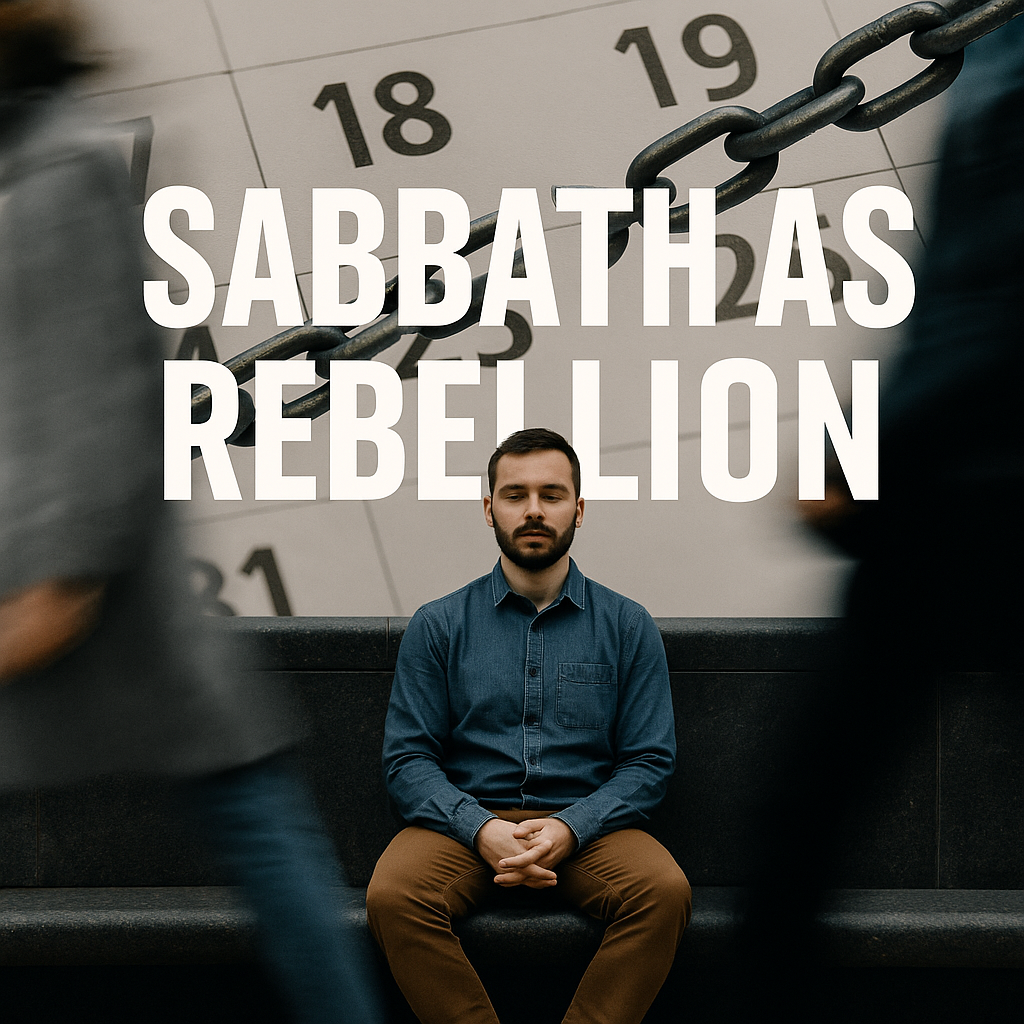

  • Sabbath As Rebellion

    Sabbath As Rebellion

    “The Sabbath was made for man, not man for the Sabbath. So the Son of Man is lord even of the Sabbath.”

    — Mark 2:27–28

    A Subversive Rest

    In a world where your worth is measured by productivity, rest is a rebellion. The Sabbath command isn’t about squeezing in a nap or catching up on Netflix. It is God’s weekly declaration that His people are not slaves to Pharaoh, Wall Street, or Silicon Valley.

    Ponder this overlooked theological truth: When we stop, we resist. We say with our lives: “I am not defined by my output but by the God who redeemed me.”

    The Sabbath as a Weapon Against Pharaoh

    When Moses delivered Israel from Egypt, God’s people were freed from endless quotas and brickmaking. Pharaoh’s economy demanded ceaseless labor. God’s covenant commanded rest. Observing the Sabbath was Israel’s way of saying, “We are not Pharaoh’s slaves anymore. We belong to Yahweh.”

    Whether we recognize it or not, our world has its own Pharaohs. The demand for constant availability, the cult of hustle, the unspoken law of emails at midnight—these are modern brick quotas. Keeping the Sabbath is rebellion against those powers. It’s a declaration of independence from the gods of busyness. It trust that Yahweh supplies what Pharaoh demands. Our rest cries out “Jehovah Jireh,” Yahweh provides.

    The Sabbath as Counter-Cultural Identity

    In an interesting shift from the Exodus law, the Sabbath command in Deuteronomy 5 is rooted not in creation alone but in redemption:

    “You shall remember that you were a slave in the land of Egypt, and the LORD your God brought you out…” (Deut. 5:15)

    To stop working is to remember you’re free—to worship is to remember who set you free.

    For Christians, the Lord’s Day extends this logic into resurrection life. Christ has triumphed over sin and death; therefore, we rest not only from our labor but in His finished work. Sabbath rest proclaims that the victory is already won. It proclaims that rest is the established for His people—as such, we gather in Sabbath worship as a corporate body, not as individuals. He saved His people, not his persons. To be in Christ is to be in the corporate community.

    Why Sabbath Is More Than “Self-Care”

    Our culture loves to market rest as self-care: spa days, Netflix binges, vacations that leave us exhausted. But biblical rest isn’t consumeristic—it’s covenantal. It reorients us to God, His people, and His promises.

    When the church gathers in worship, when families put away their devices, when believers refuse the tyranny of constant emails, that is not mere self-care—it’s spiritual warfare.

    Sabbath as Eschatological Protest

    Every time we keep Sabbath, we proclaim that the kingdoms of this world are not ultimate. Capitalism isn’t ultimate. Politics isn’t ultimate. My own to-do list isn’t ultimate.

    Sabbath is a weekly protest march declaring that Christ reigns and that eternal rest is coming. But even more than that—as wild as this may sound—it’s also evangelistic. To observe the Sabbath is a visible marker of serving Christ instead of Pharaoh. And everyone else who continues to make bricks without straw needs to see you setting the work aside for the true divine Son of God.

    Rest as Rebellion

    Can you imagine how the Egyptians would have responded if the Hebrews in slavery simply stopped? If they set the bricks aside and said “today we worship the true God.” Anyone would identify that action as rebellion. Friends, to observe the Sabbath is to rebel. To rest in Christ is to subvert the false gods of productivity, consumerism, and self-definition.

    So here is the ultimate question: Does your Sabbath reflect bondage to Pharaoh or rest in Yahweh? Who rules your time—Pharaoh, or Christ?

    True freedom is not found in endless hustle or maxed-out schedules—but in holy rest.

  • The Billy Graham Crusades Were Good, Right?

    The Billy Graham Crusades Were Good, Right?

    At some point in the modern American model of Christian church growth, a subtle yet significant shift occurred—let’s call it the “Billy Graham” shift. In 1948, Billy Graham began his “crusades,” which reached an estimated 210 million people in over 185 countries. The obvious merit of these events was the explosion of the Gospel message across the globe. Many Christians today point back to one of those crusades as the moment they became secure in their salvation in Jesus Christ, and for that I am genuinely grateful. However, I believe that there is a rarely-discussed downside to the crusades, which is worth exploring.

    What happens when a generation of Christians are saved with the words, “This is about you and Jesus—no one else?” I still see this all the time in youth ministry culture. When the moment arrives for the altar call at the end of camp, the speaker wants everyone to close their eyes and bow their heads. Then, he calls for students to stand up if they feel that Jesus is calling them. One of the encouragements in this moment is usually something along the lines of, “This isn’t about what anybody else is doing, don’t worry about them—this is about you and Jesus.”

    For what its worth: this is technically correct. The moment of faith, the moment of regeneration, is not something between the student, the crowd, the speaker, and Jesus. It is an act of the Holy Spirit to enable the student to embrace Jesus as Lord and Savior. But the problem is what happens next: the student comes forward, everyone cheers and celebrates, and then life goes on.
    That speaker goes home.
    Those students from other churches go home.
    That new, teenaged Christian goes home—often to non-Christian environments.
    And what is left?
    Just that student and Jesus.

    The Christian life was never meant to be an exclusively personal experience.
    One of the most significant reasons for bringing a child to the temple for circumcision in the Old Testament was to make a public statement that the child was a member of the covenant community and would be raised as such. In baptism today, we see the same idea: public, visible inclusion with the body of Christ. And herein lies the shift: we celebrate public inclusion via baptism, yet the moment afterwards demand our relationship with Christ be between “me and Jesus.”

    And this has significant ramifications:
    Church discipline for those living in sin is lacking, to say the least.
    Accountability for those who are church members, yet routinely neglect the gathering of the saints, is dismissed.
    Jesus can be worshipped on the ball field, lake, or deer stand.
    Jesus can be worshipped via livestream or podcasts.

    I believe that the problem Billy Graham furthered was that of the “personal Jesus,” the Jesus in my heart. And while, yes, Jesus is in every way our personal Lord and Savior, he is also our corporate Lord and Savior. He not only saves the stones which build his temple, he sets them in place among the other stones. There is no defense in the Scriptures for a Christian who chooses to be disjoined from the fellowship of believers. There is no argument to be made that the Christian life can be walked alone. We are stones of the temple. We are members of a body. You cannot claim the name of Christ yet reject his body.

    When this happens:
    Finding a church turns into church-shopping (and hopping).
    Church discipline becomes offensive.

    Church membership seems irrelevant.
    The body cannot function as it should.
    Iron cannot sharpen iron.
    It is their decision, their Jesus, their faith—please don’t confuse it with Christ’s temple, Christ’s body, or Christ’s church.

    Unfortunately, the Billy Graham movement pushed forward the Great Awakening’s uniquely independent strand of Christianity.
    I don’t believe it was intentional.
    I don’t believe he was aware of it.
    I don’t believe it is his fault.
    I don’t believe the crusades were all bad.

    But I do believe this is a reality that must be addressed.

    The corporate body of Christ must recover from an ideology of individualism and autonomy. Friends, embrace the body of Christ. Join a local church. Be honest about your faith. Be willing to be vulnerable. Don’t deprive the body of your gifts, nor you of theirs.

    We are stones of the temple, parts of the body, members of his Church. There are no biblical grounds for having it any other way.

  • Our Need for the Church is Often the Highest When Life is Good.

    Our Need for the Church is Often the Highest When Life is Good.

    I have been working on staff at a church for over 15 years. In those years, at least once a week, I take prayer requests at youth meetings, Sunday school, Bible study, etc. For the most part, the lists consist of prayers of supplication. In other words, 90% of the prayers are asking God for something, healing, jobs, travel mercies, etc. And these are all good things to bring before the Lord. In fact, I would be highly concerned if we weren’t bringing our supplications to him. After all, we are told to pray, “Give us this day our daily bread” (Matt. 6:5). Approaching the Lord with our needs is good.

    That being said, I’d like to consider the other 10%: prayers of thanksgiving. Very often, when I ask for praises, the room is silent. I never receive texts from people asking me to join them in thanking God that they traveled safely to the beach and back. For some reason, we often struggle to list the ways God has provided for us, but excel in bringing our requests. I believe there are two reasons for this: (1) we fail to see God’s goodness amid plenty, and (2) we begin to believe we are the ones providing for our needs.

    It would behoove us to recognize that this failure to express gratitude isn’t unique to the modern church–Israel was infamous for this. For example, in Judges 2:10, we read:
    “And all that generation also were gathered to their fathers. And there arose another generation after them who did not know the LORD or the work that he had done with Israel.”
    “All that generation” was referring to the generation of Joshua. If you remember, “that generation” was the one that passed through the Jordan on dry land, watched Jericho fall, defeated giants, and benefited from the sun standing still. But somehow, “another generation,” the next one, did not remember the goodness of Yahweh and turned from him to worship pagan gods.

    The chapters that follow Judges 2:10 narrate a familiar cycle in which Israel forgets Yahweh, turns to pagan gods, is sold into their enemies by Yahweh, and cries out for deliverance. The Lord, in his great mercy, then sends a deliverer (a judge) and restores peace in Israel. Rinse and repeat. So, in summary, Israel forgets their need for Yahweh when life is good. When life turns against them, they cry out for deliverance.

    Now, back to the modern church. When life is difficult, we attend church more, pray harder, put K-LOVE on the radio, and read our Bibles. We do the things that honor God because we recognize that we need Him. However, when life is good–our marriage is healthy, the children are excelling in school, and finances are secure–church becomes less important, prayer is less consistent, country music returns to the radio, and our daily Bible reading plans begins to pile up. We have more difficulty remembering the uniqueness of God’s goodness because goodness is all around us.

    This is exactly what Satan desires: a people who have forgotten or cannot be bothered to recognize God’s goodness. Goodness in life tempts complacency in sanctification. Friends, our need for the church is often the highest when life is good.