Category: Uncategorized

  • The Prodigal Son and Calvinism: Not A Foil, but A Friend (Part 2)

    The Prodigal Son and Calvinism: Not A Foil, but A Friend (Part 2)

    This post is a continuation of thought from a previous post “The Prodigal Son: It’s Not About You (Or Me)–Part 1.

    In Part 1, we explored how the parable of the prodigal son is not just a generic salvation story but a covenant drama. The prodigal represents Israel’s “tax collectors and sinners” (Jews) returning to the fold. The older brother represents the Pharisees, refusing to rejoice at their repentance. And the father embodies God’s extravagant covenant faithfulness.

    But this covenantal frame also resolves a theological puzzle. The prodigal son has often been misread as a foil against Calvinism, as if Jesus were teaching free will over against doctrines of grace. When we restore the parable to its covenantal context, the apparent foil disappears.

    The Common Misuse: A Free-Will Parable?

    Critics of Calvinism sometimes point to the prodigal son as a “proof text” for human free will. Their argument runs something like this:

    • The prodigal “came to his senses” (Luke 15:17). Doesn’t that mean he made the decisive move himself?
    • The father only runs to him after the son decides to return. Doesn’t that suggest prevenient grace or even pure human initiative?
    • The story is about a son “choosing” to come home. Doesn’t that contradict the Calvinist idea of effectual calling or irresistible grace?

    On this reading, the parable functions as Exhibit A for the Arminian: grace may be offered, but the real hinge is human choice.

    The Covenant Frame Clears The Fog

    This way of reading only makes sense if we assume the parable is about how unbelievers get saved. But Part 1 showed that’s not the case. The prodigal son is already a son. The parable is about restoration within the covenant family and the exposure of Pharisaic self-righteousness.

    • Already a son. The prodigal does not become a child by his repentance; he was always a son of the father. His return is about reconciliation, not adoption. This undermines the “free will” argument at the root. The parable never portrays how one becomes a child of God—it presupposes sonship.
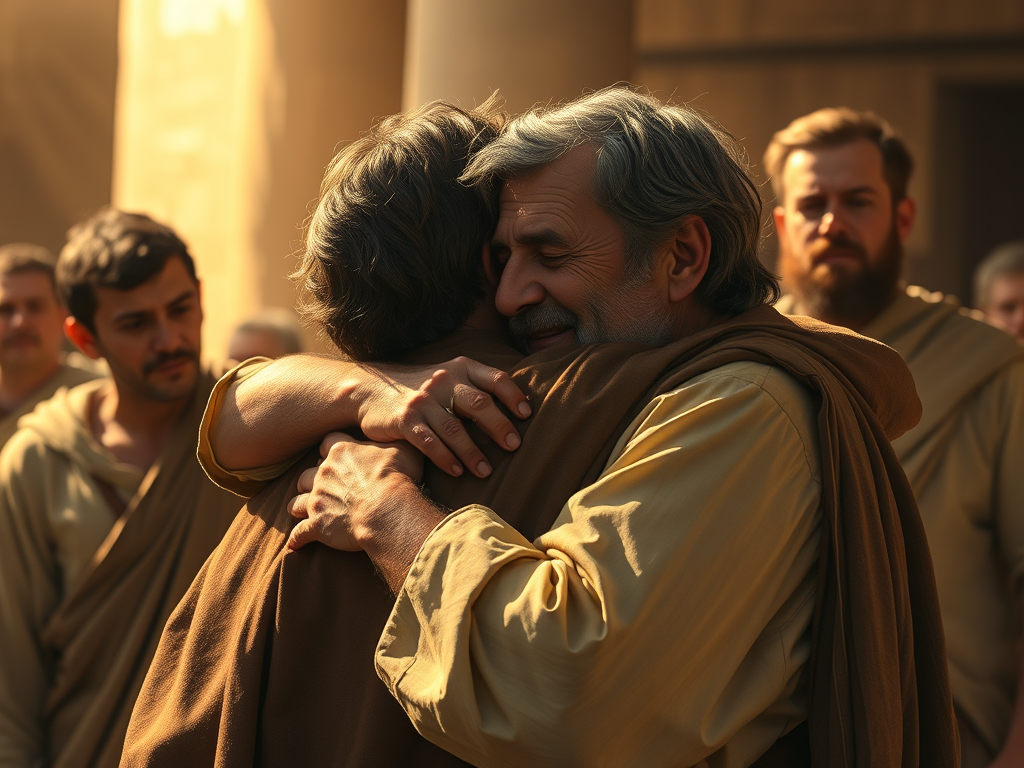
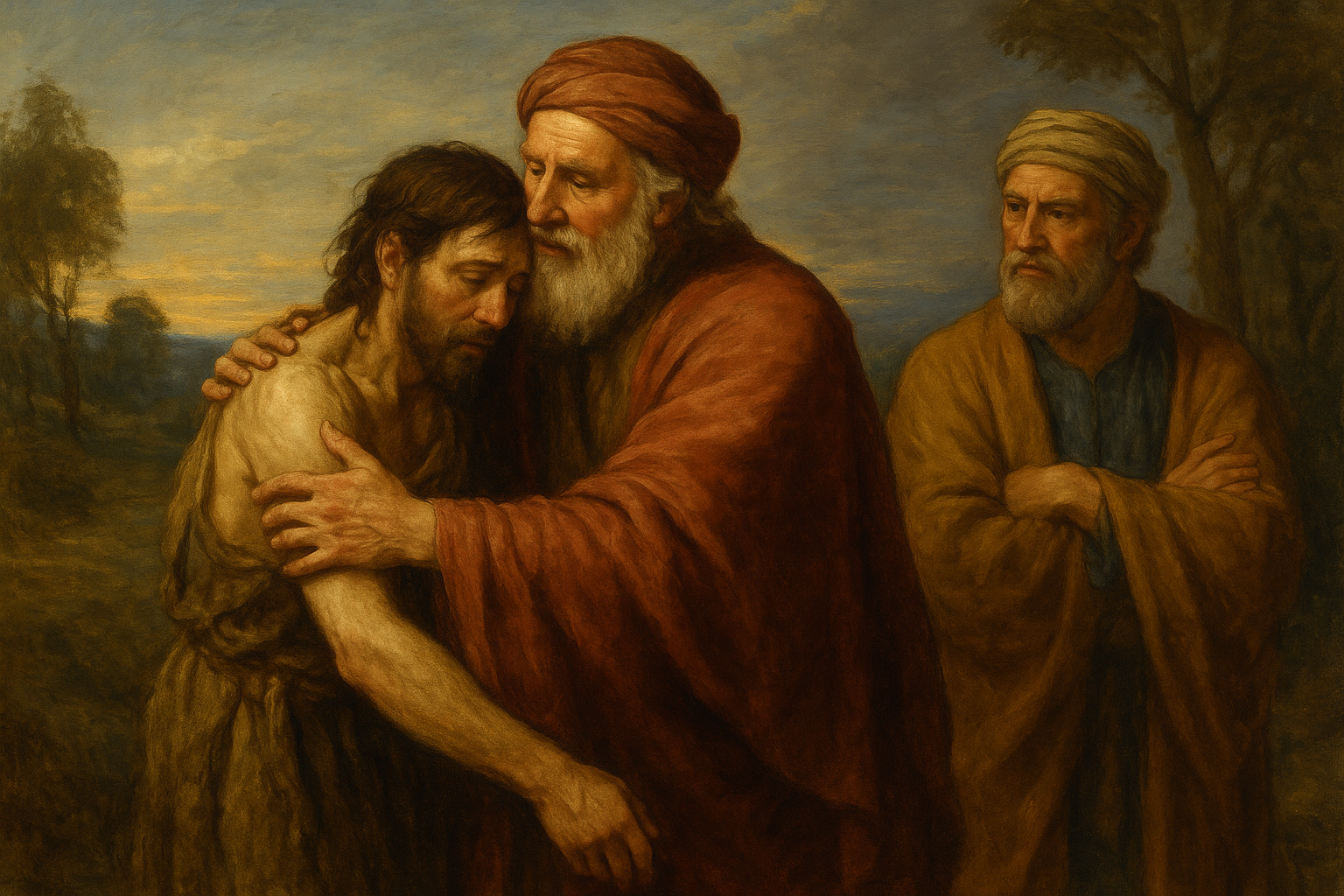
    • The Father’s initiative dominates. Even when the son “comes to himself,” his restoration depends entirely on the father’s action: running, embracing, clothing, feasting. As Kenneth Bailey points out, the father’s humiliating sprint down the road would have been a shocking reversal of social norms, emphasizing that reconciliation is his work from beginning to end (Poet and Peasant, pp. 162–165). It was the father’s right to embrace or reject.
    • The older brother unmasks works-righteousness. The real punchline is the elder brother’s refusal to celebrate. As Craig Blomberg notes, “the climactic point of the parable lies not with the prodigal’s repentance but with the elder brother’s refusal to rejoice” (Interpreting the Parables, p. 170). The parable critiques legalism, not Calvinism.

    A Reformed Reading

    When read covenantally, the prodigal son actually illustrates Reformed doctrines of grace rather than contradicting them:

    • Total depravity. The son is destitute, degraded, and feeding pigs—an unclean, helpless image. He has nothing to offer.
    • Unconditional election. His sonship is not revoked by his rebellion. He is restored not because he meets conditions, but because the father has mercy.
    • Effectual grace. The father’s embrace interrupts the son’s rehearsed speech. The decisive act of reconciliation is the father’s, not the son’s.
    • Perseverance of the saints. The son never ceases to be a son, even when estranged. His identity is secured by the father’s covenant faithfulness.

    As N. T. Wright reminds us, the parable is “about Israel coming home from exile,” and the tragedy is that Israel’s leaders refuse to join the party (Jesus and the Victory of God, p. 128). In Calvinist terms, this is the visible covenant community rejecting the grace set before them, while the repentant return is sealed by the Father’s action.

    Why This Matters

    By placing the prodigal son back into its covenantal frame, we not only read the parable more faithfully but also avoid a false theological dilemma. The story does not pit Jesus against Calvinism. Instead, it dramatizes covenant mercy, exposing the folly of self-righteousness and celebrating the Father’s joy in welcoming the wayward home.

    The prodigal son, far from being a foil to Calvinism, becomes one of its richest parables. It shows that God’s grace always precedes, always secures, and always rejoices in the return of His children.

    In Part 3: Coming Home to the Father’s Joy
  • The Prodigal Son: It’s Not About You (Or Me)—Part 1

    The Prodigal Son: It’s Not About You (Or Me)—Part 1

    This is Part 1 of a 3-part blog mini-series.

    When most Christians hear the parable of the prodigal son, they hear a salvation story. A sinner “runs away from God,” squanders his life, hits rock bottom, and finally comes home. The father runs to meet him, embraces him, and restores him. It’s a moving picture of God’s mercy toward repentant individuals. And that’s true—as far as it goes.

    But if we stop there, we risk flattening Jesus’ parable–of removing the context which makes it unique. In reality, this parable is much more deeply rooted in Israel’s covenant history, in Jesus’ ministry to His own people, and in His confrontation with the Pharisees.

    The Setting: Jesus vs. the Pharisees

    Luke 15 begins with a specific confrontation: “Now the tax collectors and sinners were all drawing near to hear him. And the Pharisees and the scribes grumbled, saying, ‘This man receives sinners and eats with them’” (Luke 15:1–2).

    That context matters–Pharisees and scribes upset that Jesus was fellowshipping with rebelling Jews (tax collectors and “sinners”). Jesus tells three parables in response—the lost sheep, the lost coin, and finally the lost son(s). Each ramps up the stakes, from an animal to money to a child. These aren’t random stories about “people getting saved.” They are a direct rebuke of the Pharisees’ attitude toward the “sinners”–fellows Israelites–Jesus was welcoming.

    As N. T. Wright puts it, these parables are not just timeless truths; they are part of Jesus’ campaign, his urgent summons to Israel to come back from exile, to come back to God (Jesus and the Victory of God, p. 127).

    The Prodigal As Israel’s Outcasts

    With this context in view, the parable begins to take shape. The younger son doesn’t represent generic pagans (i.e. Gentiles). He represents those Israelites who had squandered their covenant inheritance—tax collectors, prostitutes, and “sinners” who had abandoned Torah life. They were still sons of the house—Jews—but estranged.

    This mirrors the prophets’ language. Hosea 11:1–4 describes Israel as God’s son, called out of Egypt, yet turning to idols. Deuteronomy 32:18–20 speaks of Israel as a “faithless son” who forgot his Father. The imagery is covenantal, not merely personal.

    Kenneth Bailey, who spent decades teaching in the Middle East, points out that the younger son’s actions—demanding the inheritance early, leaving the family, and wasting it among the nations—fit the Jewish picture of Israel’s wayward children, those who had broken faith with the covenant community (Poet and Peasant, pp. 162–165).

    When the prodigal returns, broken and repentant, the father’s extravagant welcome mirrors what God was doing through Jesus: embracing the covenant outsiders and restoring them as true sons.

    The Older Brother As The Pharisees

    The older brother, meanwhile, embodies the Pharisees and the established religious system. He insists on his obedience, claims merit, and resents grace.

    This, too, has strong covenant echoes. Malachi 1:6–7 shows Israel complaining about God’s treatment, despite their “service.” The older brother is not unlike Israel’s leaders who saw themselves as faithful but refused to rejoice in God’s mercy.

    Craig Blomberg observes that the climactic point of the parable lies not with the prodigal’s repentance but with the elder brother’s refusal to rejoice over the restoration of his sibling (Interpreting the Parables, p. 170).

    The Parable As Israel’s Story

    Read this way, the parable isn’t just about how an individual gets saved. It’s about who truly belongs to Israel. Jesus is redefining the family of God around repentance and mercy, not self-righteousness and pedigree.

    N. T. Wright makes this point sharply: “The return of the prodigal is the return of Israel from exile. But the refusal of the elder brother shows that Israel’s leaders do not want to share in the joy of God’s kingdom” (Jesus and the Victory of God, p. 128).

    The prodigal son is Israel’s story, not ours.

    Why It Still Matters For Us

    Of course, the parable still speaks to individuals. Yes, the parable still speaks to the Church. Every Christian can identify with the prodigal’s repentance and the Father’s embrace. Any church can fall into the older brother’s resentment. But when we recover the Jewish covenantal frame, the story becomes sharper and richer.

    It reminds us that God’s kingdom is not about preserving status or merit, but about rejoicing when the lost return. It’s about restoration and reconciliation. It challenges us to ask: Are we more like the Father, eager to welcome, or more like the older brother, resentful when grace offends our sense of order?

    To be continued in Part 2: The Prodigal Son and Calvinism

  • Sabbath As Rebellion

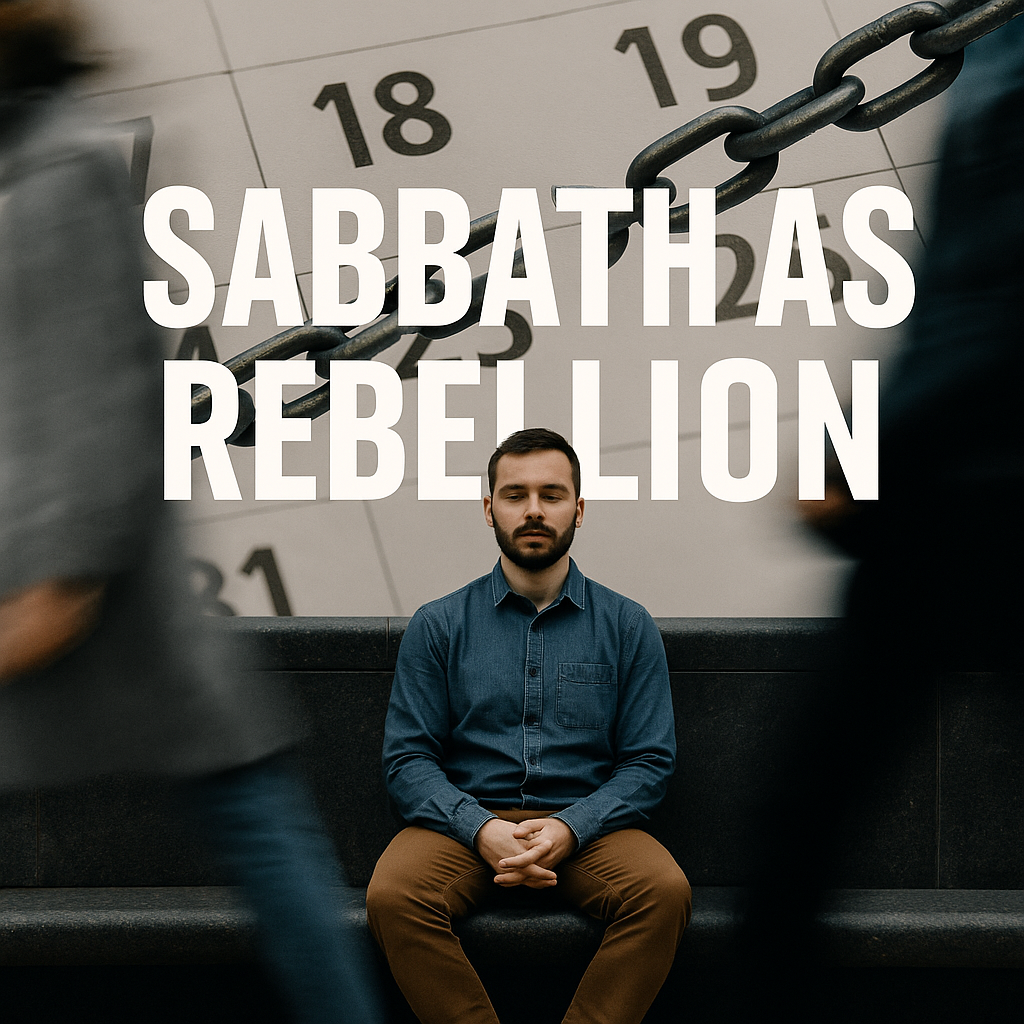
    Sabbath As Rebellion

    “The Sabbath was made for man, not man for the Sabbath. So the Son of Man is lord even of the Sabbath.”

    — Mark 2:27–28

    A Subversive Rest

    In a world where your worth is measured by productivity, rest is a rebellion. The Sabbath command isn’t about squeezing in a nap or catching up on Netflix. It is God’s weekly declaration that His people are not slaves to Pharaoh, Wall Street, or Silicon Valley.

    Ponder this overlooked theological truth: When we stop, we resist. We say with our lives: “I am not defined by my output but by the God who redeemed me.”

    The Sabbath as a Weapon Against Pharaoh

    When Moses delivered Israel from Egypt, God’s people were freed from endless quotas and brickmaking. Pharaoh’s economy demanded ceaseless labor. God’s covenant commanded rest. Observing the Sabbath was Israel’s way of saying, “We are not Pharaoh’s slaves anymore. We belong to Yahweh.”

    Whether we recognize it or not, our world has its own Pharaohs. The demand for constant availability, the cult of hustle, the unspoken law of emails at midnight—these are modern brick quotas. Keeping the Sabbath is rebellion against those powers. It’s a declaration of independence from the gods of busyness. It trust that Yahweh supplies what Pharaoh demands. Our rest cries out “Jehovah Jireh,” Yahweh provides.

    The Sabbath as Counter-Cultural Identity

    In an interesting shift from the Exodus law, the Sabbath command in Deuteronomy 5 is rooted not in creation alone but in redemption:

    “You shall remember that you were a slave in the land of Egypt, and the LORD your God brought you out…” (Deut. 5:15)

    To stop working is to remember you’re free—to worship is to remember who set you free.

    For Christians, the Lord’s Day extends this logic into resurrection life. Christ has triumphed over sin and death; therefore, we rest not only from our labor but in His finished work. Sabbath rest proclaims that the victory is already won. It proclaims that rest is the established for His people—as such, we gather in Sabbath worship as a corporate body, not as individuals. He saved His people, not his persons. To be in Christ is to be in the corporate community.

    Why Sabbath Is More Than “Self-Care”

    Our culture loves to market rest as self-care: spa days, Netflix binges, vacations that leave us exhausted. But biblical rest isn’t consumeristic—it’s covenantal. It reorients us to God, His people, and His promises.

    When the church gathers in worship, when families put away their devices, when believers refuse the tyranny of constant emails, that is not mere self-care—it’s spiritual warfare.

    Sabbath as Eschatological Protest

    Every time we keep Sabbath, we proclaim that the kingdoms of this world are not ultimate. Capitalism isn’t ultimate. Politics isn’t ultimate. My own to-do list isn’t ultimate.

    Sabbath is a weekly protest march declaring that Christ reigns and that eternal rest is coming. But even more than that—as wild as this may sound—it’s also evangelistic. To observe the Sabbath is a visible marker of serving Christ instead of Pharaoh. And everyone else who continues to make bricks without straw needs to see you setting the work aside for the true divine Son of God.

    Rest as Rebellion

    Can you imagine how the Egyptians would have responded if the Hebrews in slavery simply stopped? If they set the bricks aside and said “today we worship the true God.” Anyone would identify that action as rebellion. Friends, to observe the Sabbath is to rebel. To rest in Christ is to subvert the false gods of productivity, consumerism, and self-definition.

    So here is the ultimate question: Does your Sabbath reflect bondage to Pharaoh or rest in Yahweh? Who rules your time—Pharaoh, or Christ?

    True freedom is not found in endless hustle or maxed-out schedules—but in holy rest.

  • Jericho Fell, The Temple Fell: God’s Plan for the Nations

    Jericho Fell, The Temple Fell: God’s Plan for the Nations

    Jericho fell so the Seed of promise might be sown. The Temple fell so that Christ’s harvest might be won.

    Sometimes a single line can capture the sweep of the whole Bible. From the walls of Jericho to the stones of the Temple, God has been writing one story: the story of Christ for the nations.

    Jericho Fell: A Seed Planted in the Land

    When Israel marched around Jericho and the walls came crashing down, it wasn’t just a victory for one nation. It was God’s way of planting His people in the land He had promised to Abraham.

    Why? Because God had already promised that through Abraham’s Seed all nations would be blessed (Genesis 12:3; Genesis 22:18). Jericho’s fall wasn’t about Israel’s glory—it was about clearing the ground so the Seed could take root in history. Because the Seed in view is a singular seed–its THE Seed: Christ. The land was never the ultimate goal; it was the soil in which God would grow His greater plan. The soil from which a Seed would become a cosmis tree:

    "I myself will take a sprig from the lofty top of the cedar and will set it out… On the mountain height of Israel I will plant it, that it may bear branches and produce fruit and become a noble cedar. And under it will dwell every kind of bird; in the shade of its branches birds of every sort will nest." (Ezekiel 17:22-24)

    The land was the down-payment. It was the security deposit. It was never the end goal. Jericho must fall so the Seed could be planted.

    The Temple Fell: A Harvest Opened to the World

    Centuries later, another set of stones fell. In A.D. 70, the Temple in Jerusalem was destroyed. For many, it looked like the end of Israel’s story. But in reality, it was the next step in God’s plan.

    The Temple had pointed forward all along: to the once-for-all sacrifice of Christ, the true Lamb of God (John 1:29; Hebrews 10:11–14). When Christ died and rose again, the need for animal sacrifices ended. And when the Temple fell, the gospel was no longer tied to one city, one altar, or one people. The harvest of the nations had begun (John 12:24; Matthew 28:18–20).

    The tree was spreading its branches to cover the whole earth.

    One Story, One Savior, One Mission

    From the fall of Jericho to the fall of the Temple, God was moving history toward the same goal: salvation through Christ for all peoples.

    God’s plan has always been global. Always Christ-centered. Always aimed at a harvest of people from every tribe, tongue, and nation worshiping the Lamb (Revelation 7:9). Just as Jericho fell so the Seed might be planted, so the Temple fell so the branches might extend.

    What This Means for Us

    It means that God’s plan is unstoppable. What looks like ruin in the moment—whether the collapse of Jericho’s walls or the destruction of the Temple—is actually God’s way of moving His story forward. And it means that we, the Church, are caught up in this mission. We are the fruit of the harvest and also the laborers sent into the field (Matthew 9:37–38).

    So when we look back at Jericho and the Temple, we aren’t just reading history—we’re seeing our place in God’s story. Christ is the Seed. Christ is the Temple. Christ is for the nations.

    When you see the ruins of Jericho and the rubble of the Temple, remember: God builds His kingdom, not on human walls, but on Christ alone. And that kingdom has no boundaries.

  • Why Is Saul Naked in 1 Samuel 19?

    Why Is Saul Naked in 1 Samuel 19?

    What Jonathan gave freely, Saul lost by force—and what that teaches us about Christ’s lordship.

    The Naked King
    This is the kind of Bible passage that makes Sunday school teachers squirm. In 1 Samuel 19, Saul—the king of Israel—lies flat on the ground, stripped of his clothes (1 Sam. 19:23–24). It’s a strange and unsettling image and, as such, is the sort of passage we tend to skim past. When this scene appears, the reader’s attention is already drawn to previous unusual details, like the household idols in David’s house (1 Sam. 19:13), the company of prophets around Samuel (1 Sam. 19:18-20), or Saul’s violent pursuit of David (1 Sam. 19:8-10). But the narrator lingers on Saul’s nakedness—and he does so for a very important reason. However, the key to understanding why comes from the broader narrative: just one chapter earlier, Saul’s son Jonathan also removes his royal robe. When placed side by side, the contrast between these two episodes couldn’t be sharper.

    Jonathan’s Voluntary Surrender
    In 1 Samuel 18:3–4, Jonathan takes off his robe and gives it to David. This is no small act. In the ancient world, clothing symbolized identity and status. Jonathan’s robe wasn’t just fabric; it represented his position as crown prince. To give it away was to yield his claim to the throne. Jonathan’s gesture is covenantal and deliberate. It’s an act of humility, a recognition that God’s hand rests on David. He decreases so that David may increase. His submission is voluntary, born of faith and love.

    Jonathan’s actions anticipate the New Testament pattern of discipleship. To follow Christ is to “put off the old self” and “put on the new” (Eph. 4:22–24). To be his disciple is to “hate” father, mother, wife, children, brother, sister—even his own life (Luke 14:26). Jonathan prefigures this dynamic by laying aside his own honor and clothing another with it. He voluntarily casts his crown at the feet of the anointed one of YHWH (Rev. 4:10-11).

    Saul’s Forced Humiliation
    By contrast, Saul’s disrobing is not chosen but compelled. In 1 Samuel 19:23–24, the Spirit of God overwhelms him, and Saul strips off his clothes and lies helpless throughout the day and night. What Jonathan surrendered in covenant love, Saul loses in humiliation. Far from a heroic prophetic moment, Saul’s nakedness symbolizes his undoing. The king who resists God’s anointed is forcibly stripped of his dignity—the one who would not yield is brought low.

    The Bible often uses clothing as a sign of honor or shame. Joseph is given a magnificent coat of honor (Gen. 37:3). The Prodigal Son is covered in his father’s best robe (Luke 15:32). In contrast, Adam and Eve hide in shame once they realize their nakedness (Gen. 3:7). Job tears his robe when undone by grief (Job 1:20). Isaiah walks naked as a prophetic sign of judgment (Isa. 20:2–4). To be clothed is to be honored, but to be stripped bare is to be exposed, powerless, and humiliated. Saul’s unraveling fits this biblical pattern.

    Commentators agree on this basic understanding but highlight different angles. Robert Alter describes Saul’s condition as “the grotesque abasement of the king.”1 David Tsumura emphasizes that the removal of garments likely signified the loss of royal dignity.2 Dale Ralph Davis underscores the humiliation of a king undone by God’s Spirit.3 Walter Brueggemann notes the biting irony: Saul, who sought to destroy God’s anointed, finds himself unmade by God’s power.4 In general, scholars tend to agree that Saul’s nakedness symbolizes a loss of royal status. Yet the irony is sharper when read alongside Jonathan’s robe-giving: what Jonathan does willingly, Saul experiences unwillingly.

    Reading the Forest, Not Just the Trees
    If one read these episodes in isolation, the rhetorical contrast might be overlooked. Jonathan’s robe-giving simply seems like a tender story of friendship. Saul’s nakedness looks like a bizarre prophetic frenzy. Read as disjointed stories results in merely moralized illustrations for the church. But when read together, they form a deliberate juxtaposition—two paths of submission.

    This is why it is so valuable to read large swaths of Scripture at once. The Bible’s authors were master storytellers. When we zoom in too tightly, we risk missing the broader patterns. Jonathan and Saul’s contrasting acts make sense not as stand-alone vignettes but as side-by-side portraits of willing surrender versus forced humiliation.

    Every Knee Will Bow
    This contrast points us forward to a deeper reality. Paul writes in Philippians 2:10–11 that one day “at the name of Jesus every knee should bow, in heaven and on earth and under the earth, and every tongue confess that Jesus Christ is Lord.”

    Some, like Jonathan, will bow gladly—casting down their crowns in joyful submission.
    Others, like Saul, will be brought low despite themselves.
    Either way, Christ will be confessed as King.

    Encouragement for the Church
    So why is Saul naked in 1 Samuel 19? Because Jonathan was naked in 1 Samuel 18. One disrobed in covenant love, the other in divine humiliation. One bowed gladly, the other was brought low.
    The contrast isn’t only about two men in Israel’s history; it’s about two ways all people respond to God’s Anointed. One day, every knee will bow—some with joy like Jonathan, others in judgment like Saul. Either way, Christ will be confessed as King.

    That’s why the church can take courage today. Those who humble themselves now are not left exposed but are clothed in the righteousness of Christ. The question is not whether Jesus will be confessed as Lord, but how. Will it be the willing surrender of faith—or the forced acknowledgment of defeat?

    Jonathan shows us the path of covenant loyalty, humility, and joy. Saul shows us the path of resistance, pride, and humiliation. Both remind us that the Lord will not be mocked: his anointed King will be honored.

    How Might We Practice “Forest Before Trees” Bible Reading Today?
    A few suggestions:

    1. Read whole books in one sitting. Just as letters weren’t meant to be piecemeal, neither were Samuel or Acts. Try reading through an entire Gospel or prophetic scroll in a single afternoon.
    2. Trace repeated themes. Look for how clothing, covenant, exile, or temple imagery develops across the text.
    3. Ask narrative questions. How does one scene echo or contrast with another? How does this section prepare for what follows?
    4. Then zoom in. Once the big picture is clear, dig into word studies, cross-references, and applications.

    By reading broadly, we not only see the forest—we start to understand why each tree was planted where it is.

    1. Robert Alter, The David Story, (New York: W.W. Norton & Company, 1999), 118–19 ↩︎
    2. David Tsumura, The First Book of Samuel, NICOT (Grand Rapids: Eerdmans, 2007), 508–9 ↩︎
    3. Dale Ralph David, 1 Samuel: Looking on the Heart, (Glasgow: Christian Focus, 2000), 196–202 ↩︎
    4. Walter Brueggemann, First and Second Samuel, (Louisville: Westminster John Knox Press, 1990), 138–39 ↩︎
  • A Pitch for Fast Change in Church Revitalization

    A Pitch for Fast Change in Church Revitalization

    “No one pours new wine into old wineskins. If he does, the wine will burst the skins—and the skins will be destroyed. But new wine must be put into fresh wineskins.” Luke 5:37–38

    Church revitalization is among the hardest assignments a minister can receive. And while many congregations long for renewal, few actually experience it. Research in organizational behavior shows that 60–70% of all business change efforts fail.1 In ministry, the numbers may be even worse. Thom Rainer (CEO of Lifeway) argues that traditional approaches to revitalization carry very low odds of lasting change—just 2% in many cases.2 Yet failure is not inevitable. How we approach change makes all the difference.

    Traditional wisdom seems to be that slow, incremental adjustments are the safest course. Ease people into new songs. Nudge the governance structure. Introduce mission language gradually. These are slow but methodical culture shifts are geared towards the heart–the hope is that change can be embraced in small bites, whereas wholesale upheaval might cause complete imposion. But more often than not, this “slow fade” approach does not work. The statistcs cited above back this up. The Reformed tradition—and Scripture itself—suggests a better way: decisive, gospel-driven reformation.

    Why Slow Change Fails

    The instinct to move slowly is understandable, but it has a host of areas in which it can backfire.

    1. Nostalgia lingers. The “good ole days” remain within reach, and the congregation never feels cut off from its old identity. You can honor history without clinging to the past. But too often, churches get this formula skewed.
    2. Resistance solidifies. Incrementalism gives opponents time to organize. In many churches, the mindset becomes: “This too shall pass. If we wait long enough, the pastor will move on.”
    3. Change fatigue sets in. Endless tweaks without visible transformation wear people down. Organizational scholars call this change fatigue.3 In church life, it manifests as apathy, disengagement, and cynicism. The congregations experiences change fatiuge by losing energy in new initatives; the leadership experiences it by growing weary of constantly having to make difficlut decisions.

    This is why in the corporate world, only 13% of organizations with weak change management succeed—while those with clear, decisive strategies succeed 88% of the time.4 The principle carries over: timidity does not lead to reformation.

    Why Fast Change Fits the Reformed Vision

    Fast change, done with wisdom and pastoral care, aligns better with both the data and the theology of the Reformed tradition.

    • It creates urgency. John Kotter’s famous “burning platform”5 illustrates how bold change communicates that the status quo is no longer an option. The prophets did the same: “How long will you go limping between two opinions?” (1 Kings 18:21).
    • It resets identity. The church is not called to be a museum of its past but a living body under Christ the Head. Decisive shifts help the congregation see itself not through the lens of nostalgia, but through the lens of its covenant identity in Christ.
    • It closes the back door. Just as sanctification calls us to “put off the old self” (Eph. 4:22–24), revitalization requires a decisive putting away of old habits. Alcoholics Anonymous understands that cutting off is more effective than tapering; the same is true in congregational reform.

    Biblical Models of Decisive Reform

    The pattern in Scripture is not gradual drift but decisive covenant renewal.

    • Nineveh (Jonah 3:6-10): When the Assyrian people of Nineveh heard the news of judgment, they embraced immediate reform. Sackcloth, ashes, mourning—their whole world stopped. While the change did not buy them eternity, it did provide a delay—YHWH’s judgment would wait: they had ceased their wickedness.
    • Josiah’s reforms (2 Kings 23): He tore down high places and smashed idols in one sweeping act of obedience. Reformation meant removal, not slow accommodation. Josiah had no concern for offending Israel–his concern was faithfulness to YHWH.
    • Pentecost (Acts 2): The Spirit constituted the church in one dramatic event, reorienting its identity from fearful disciples to bold witnesses.

    The Reformed tradition has always echoed this. The Reformation was not a tweak of medieval practice; it was a decisive recovery of sola Scriptura and the gospel of justification by faith alone. Calvin called for “the pure preaching of the Word, the right administration of the sacraments, and the faithful exercise of discipline” (Institutes 4.1.9)—marks that require clarity, not gradualism.

    What Fast Change Looks Like in Practice

    In a local church, fast change does not mean recklessness. It means courageous, biblically grounded leadership. It means upopular decisions. It means follow-through. Examples include:

    • Worship: Move decisively to Christ-centered, Word-saturated liturgy, rather than “sneaking in” new songs.
    • Mission: Frame and announce a gospel-driven mission statement that redefines the congregation’s identity in light of the Great Commission.
    • Structures: Replace broken committee models with elder-led polity decisively, not piecemeal. This reflects the New Testament pattern (Titus 1:5).
    • Prayer & Repentance: Call the church to corporate prayer in areas in which personal comfort has been prioritized over Gospel calling and brotherly love.

    In each case, decisive change helps God’s people live in line with their covenant identity.

    The Pastoral Charge

    Fast change will sting. Some may resist. Some may even leave. But the call of the shepherd is to lead God’s people toward health, not to protect nostalgia. If the shepherd sees a wolf, he quickly drives the sheep to safety. If the sheep are headed toward a cliff, the shepher re-directs the sheep–even if the grass on the edge of the cliff is wonderful. The calling of the shepherd is alignemnet with the Great Shepherd–should we draw this out for fear of offense? The Westminster Confession reminds us that Christ alone is Head of the Church (WCF 25.6). Faithful pastors must lead congregations away from cultural captivity and toward Christ’s rule—even if it requires ripping off the band-aid.

    The alternative is slow decline, which leaves Christ’s body weak and malnourished. Or, it is often years of constant conflict, leaving shepherds weary and burnt out. Better to endure the pain of bold reform than the slow death of timidity.

    Conclusion

    Revitalization rarely succeeds through slow, hesitant adjustment. Both research and Scripture point to the same reality: lasting transformation comes through decisive, biblically-grounded change. Our congregations do not need a never-ending project on their hands–they need to be fed the kind of food that is nurturing to their soul. If they are fed well through the change, they will mature and grow, able to show others where to find food that nourishes the soul.

    Pastor, if you are called to revitalize, lead with clarity, urgency, and conviction. Ground every shift in the Word, lean on the Spirit through prayer, and shepherd with love. But do not delay. Some may leave. But in my conversations and experiences through multiple church reforms–those people were probably going to leave anyways. There would eventually be a limit to how much change would be acceptable–be wary of catering to disgruntled sheep who refuse to be fed.

    Rip off the band-aid. Reform for the glory of Christ and the good of His Church.

    “New wine must be put into fresh wineskins” (Luke 5:38).


    1. Beer, Michael & Nohria, Nitin. Breaking the Code of Change. Boston: Harvard Business School Press, 2000. ↩︎
    2. https://replantbootcamp.com/should-we-revitalize-or-replant/ ↩︎
    3. Lewis, Laurie K. Organizational Change: Creating Change Through Strategic Communication. Wiley-Blackwell, 2019. ↩︎
    4. Prosci. Best Practices in Change Management. 11th Edition, 2020. ↩︎
    5. Kotter, John. Leading Change. Boston: Harvard Business School Press, 1996. ↩︎
  • The American Eyes Are Tunnel Visioned

    The American Eyes Are Tunnel Visioned

    “If one member suffers, all suffer together; if one member is honored, all rejoice together. Now you are the body of Christ and individually members of it.”
    — 1 Corinthians 12:26–27

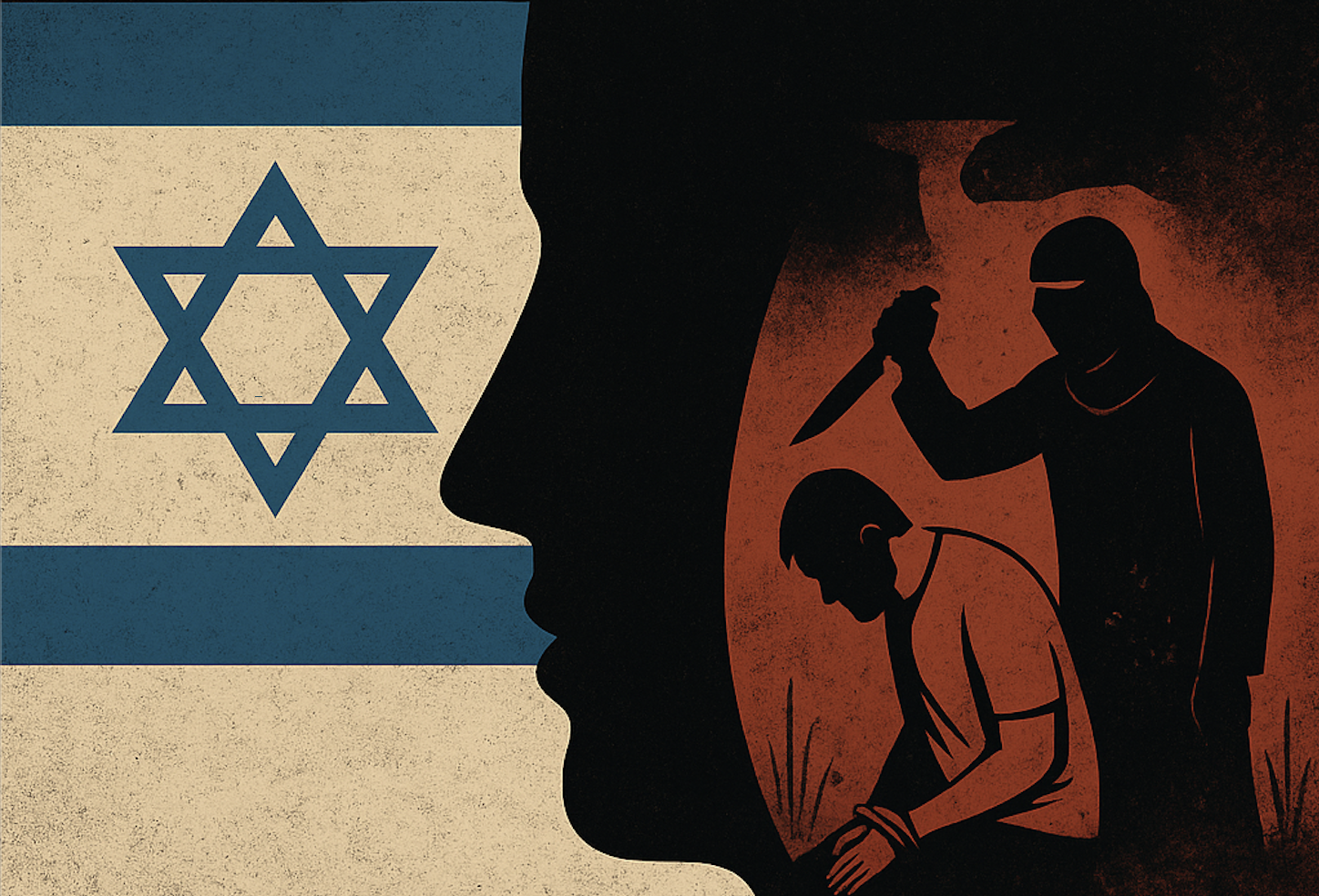
    American evangelicalism has a strange blind spot–and its one not really shared with Christendom outside of America. With one eye fixed firmly on Israel and the other seemingly closed to the persecuted church around the world, we’ve developed what can only be called tunnel vision. We raise our voices in prayer for the geopolitical survival of a secular nation—while our brothers and sisters in Christ are being beheaded by radical Islamists in Africa.

    Where is the urgency for the actual body of Christ?


    Praying for a Pagan Nation While Ignoring the Persecuted Church

    Let’s be clear: modern Israel is a secular nation. While it retains immense biblical significance as the historical homeland of God’s covenant people, the current state of Israel is not a theocracy under Yahweh. In fact, Israel ranks as one of the most unreached nations in the world as well as one of the most theologically liberal nations, with fewer than 0.3% of the population identifying as evangelical Christian (Joshua Project, 2025). Missionary efforts are often actively opposed by Israeli authorities.

    By contrast, over 360 million Christians today live under high levels of persecution, many of them in Muslim-majority regions (Open Doors USA, World Watch List 2024). In Nigeria alone, more than 4,100 Christians were killed for their faith in 2023—most at the hands of Islamist groups like Boko Haram or Fulani militants .

    These are our brothers and sisters in Christ. Yet American churches are largely silent.


    A Misplaced Missional Focus

    There is also an enormous gap between where God is working and where the American church is looking.

    While missions to the Jewish people are important, statistical data suggests that Muslims are converting to Christianity at vastly higher rates than ethnic Jews. According to one peer-reviewed study by Duane Alexander Miller and Patrick Johnstone:

    “The number of Muslim-background believers (MBBs) worldwide has grown from around 200,000 in 1960 to over 10 million today.”
    (The World’s Muslim Population and the Growth of the Church, IJFM Vol. 31:1, 2014)

    That’s a 50-fold increase in just over 60 years. Compare that to estimates of Jewish believers in Jesus worldwide—around 300,000 globally, according to Jews for Jesus (2022) .

    Statistically, this means Muslims are coming to Christ at over 30x the rate—and some estimates put it even higher, depending on region. God is moving powerfully in the Muslim world. So why aren’t we paying attention?


    Christ in His Body, Not in a Flag

    To care about Israel is not wrong. To prioritize a political state at the expense of the global church is. Paul says clearly that “not all who are descended from Israel belong to Israel” (Rom. 9:6), and again, that “if you are Christ’s, then you are Abraham’s offspring, heirs according to promise” (Gal. 3:29).

    In the New Covenant, the church is called “the Israel of God” (Gal. 6:16). Christ died for His bride—the Church—not for a political entity or ethnic group. He now dwells not in temples or geographic borders, but in His people by the Spirit (Eph. 2:19–22).

    To fixate on modern Israel while ignoring Christian martyrdom is to betray the very body of Christ.


    What Should We Do?

    1. Pray for the persecuted church: Resources like Voice of the Martyrs and Open Doors provide regular updates and prayer guides.
    2. Recalibrate your eschatology: If your eschatology blinds you to the Body of Christ, its time to re-evaluate it. Covenant theology rightly emphasizes the unity of God’s people throughout redemptive history.
    3. Support missions among Muslims: Ministries like Frontiers, Global Gates, and Elam Ministries are seeing unprecedented gospel fruit in the Muslim world.
    4. Repent of nationalism masquerading as Christianity: The kingdom of God knows no earthly borders and flies no earthly flag.

    Final Word

    Jesus is not coming back for a nation-state. He is coming for His bride, the Church. And that bride is bleeding in the shadows of Nigeria, Afghanistan, and Indonesia. When American Christians cry out for Israel but fall silent at the sound of the martyr’s blade, something is deeply wrong.

    Let us fix our eyes on Christ—and on His body. The gospel is not a foreign policy tool. It is the power of God unto salvation. And it is spreading—not in headlines, but in hidden places. Let us see rightly.


    A Pastoral Note to My Brothers and Sisters

    I know these words may feel weighty—perhaps even uncomfortable. But they are written with love, not condemnation. I write not as someone who has it all figured out, but as one who has been convicted by the very blindness I describe. This is not a call to abandon concern for Israel or to neglect prayer for any people group. Rather, it’s a plea to remember the Church. To lift our eyes and see the whole Body of Christ—suffering, growing, advancing—in places we’ve often overlooked.

    Let us be people of truth and compassion. People shaped more by the Word than by the news. People whose hearts beat in rhythm with our Savior, who laid down His life for the church.

    And let us pray—deeply, earnestly—for our brothers and sisters who bear that cross every day.


    Sources

    1. Joshua Project. “Country: Israel.” https://joshuaproject.net/countries/IS
    2. Open Doors USA. World Watch List 2024 Report. https://www.opendoorsusa.org
    3. Duane Alexander Miller and Patrick Johnstone, “Believers in Christ from a Muslim Background: A Global Census,” International Journal of Research and Ministry Vol. 31:1, 2014.
    4. Jews for Jesus. “How Many Jewish Believers Are There?” https://jewsforjesus.org

  • Do Christians and Muslims Worship the Same God?

    Do Christians and Muslims Worship the Same God?

    Imagine two patients diagnosed with terminal cancer.
    Both are prescribed chemotherapy. One receives the real thing—an intravenous mixture packed with cytotoxic agents designed to destroy cancer cells. The other receives a solution labeled “chemo,” but it’s made of vitamins, sugar water, and saline. It carries the name, but lacks the necessary power to save. As such, One is healed. The other is not.

    Why? Because despite the label, only one contains the active ingredient—the thing that actually kills the cancer.

    This is the difference between the Christian God and the god of Islam.

    What Makes Chemo Work?

    Chemotherapy isn’t just a name—it’s a treatment defined by its active agents. Drugs like cisplatin, doxorubicin, or paclitaxel do the hard work: they attack DNA, disrupt cell division, and force cancer cells into programmed death. BUT, if you strip away those compounds, you no longer have chemotherapy. You have a label without power.

    The Same is True of God

    Muslims and Christians may both use the word “God,” and they may even believe they are worshiping the one Creator. But when you examine the actual content—the nature and work of that God—you quickly see they are not the same.

    Here’s what the Christian God possesses that the Muslim god denies:

    1. The Trinity – God is Father, Son, and Holy Spirit. This is not an add-on; it is God’s eternal identity.
    2. The Incarnation – God became flesh in Jesus Christ. Islam rejects this completely.
    3. The Cross and Resurrection – At the center of Christian faith is the saving death and bodily resurrection of Jesus. Islam denies both.
    4. Faith-Based Righteousness – Christianity offers salvation by grace through faith in Christ. Islam teaches salvation by works and merit.
    5. The Bible – Christians receive the Old and New Testaments as God’s Word. Muslims reject or overwrite this revelation with the Qur’an.

    By the way, even Muslims don’t believe we worship the same God.
    The Qur’an explicitly denies the deity of Christ, and Islam considers the worship of Jesus as “shirk”—blasphemous idolatry.
    So if Jesus is God to Christians, and not God to Muslims, we are not worshiping the same being.

    Why This Matters

    To say that Christians and Muslims worship the same God is not just misleading—it’s spiritually dangerous. It may sound respectful, even tolerant, but it subtly denies the heart of the gospel.

    If you take away God’s Son, God’s Spirit, God’s Word, and God’s saving grace—you don’t just have “a different perspective on the same God.”
    You have a different god altogether.

    Jesus said, “No one comes to the Father except through me” (John 14:6). That statement is not just exclusive—it’s definitive. A god who cannot be approached through the Son is not the Father. A worship system that denies the cross is not centered on the true and living God (see Mark 8:29-33).

    Conclusion: Chemo by Name Isn’t Enough

    If you jumped to the bottom of this article for the answer, here it is: Christians and Muslims do not worship the same God. In fact, any religion that is not Christianity does not worship the same God of Christianity. Real chemo contains real power. Real salvation comes from the real Triune God—Father, Son, and Holy Spirit—who acts in history, speaks through Scripture, and saves by grace. Anything else may carry the name, but it cannot heal the soul.

  • From Fog Machines to Incense: Why Millennials and Gen Z Are Turning to Liturgy

    From Fog Machines to Incense: Why Millennials and Gen Z Are Turning to Liturgy

    Once upon a time, the ideal church had stadium seating, LED walls, and a worship set indistinguishable from Coldplay. But something is shifting. Slowly, quietly, almost counterintuitively, young Christians are trading smoke machines for incense, TED Talk sermons for creeds, and hype music for hymns. This isn’t a rejection of Christianity. It’s a rejection of thin Christianity—marketed, manufactured, and sometimes, morally bankrupt.

    The End of the Attractional Model

    The numbers are impossible to ignore:

    • 57% of young adults (18–35) say they’re disillusioned with the performance culture of modern church services (Barna, 2023).
    • Churches built on production value but lacking doctrinal depth are losing young adults rapidly, especially post-COVID (Lifeway Research, 2022).
    • Meanwhile, traditions like Anglicanism, Eastern Orthodoxy, and confessional Lutheranism are quietly growing, with Millennials and Gen Zs citing “stability,” “sacramentality,” and “the ancient faith” as primary draws (Pew Research, 2021).

    Howesver, the crisis isn’t just about style—it’s about substance.

    The Failure of Celebrity Christianity

    The attractional, platform-driven model of church is imploding. Ravi Zacharias. Carl Lentz. James MacDonald. Bill Hybels. Houston. Chicago. Seattle. Hillsong. Willow Creek. Each moral failure left not just broken institutions, but disillusioned congregants—many of them young. These churches often slipped into an error which blurred the line between spiritual leadership and brand management.

    For Millennials and Gen Z, many of whom were raised in or around these churches, the damage is personal. Their pastors were brands. Their churches were empires. And when it all fell apart, it felt like betrayal. The result? Not always atheism—not always deconstruction–but often exile. They didn’t leave Jesus; they left a system that packaged Him like a product.

    A Rejection of Postmodern Drift

    But there’s more than just disappointment. There’s also a deeper shift at play: a philosophical revolt against postmodernism itself. Behind all of this lies a long-coming cultural exhaustion. For decades, postmodernism told us:

    • Truth is personal.
    • Morality is relative.
    • Institutions are oppressive.
    • Everything should be fluid.

    Gen Z (those born 1997-2012) has grown up inside this cultural logic—and it has failed them too. They’re drowning in freedom without form; choice without meaning. What began as liberation now feels like disintegration. They want boundaries. They want permanence which, closely tied to this, means they want assurance. “Give us something real.”

    And so, paradoxically, they are running not toward novelty—but toward tradition. Toward structure. Toward the truth-with-borders that creeds and liturgies provide. They want truth that doesn’t flex with public opinion. Democracy is great, but we do not want truth to be democratic.

    “The modern self wants autonomy without limits. But meaning requires boundaries.”
    —Carl Trueman, The Rise and Triumph of the Modern Self

    The return to liturgial worship, then, becomes not just church preference—but cultural resistance. It rebells against religious weightlessness and demands gravitas.

    The Hunger for Rootedness

    In place of celebrity pastors and curated sermons, young Christians are seeking:

    • Churches where Scripture is central.
    • The sacraments are serious.
    • Songs with strong theology, not just emotional vibes.
    • Worship that doesn’t depend on charisma but is shaped by ancient rhythms of grace.

    “Liturgy roots us in something enduring when everything else feels like sand.”
    —Tish Harrison Warren, Liturgy of the Ordinary

    Ancient Form, Living Faith

    It is important to emphasize: this isn’t nostalgia. This isn’t your hair-style from the 80s coming back into vogue. This is much more formative, much more impactful, much more lasting: it’s discipleship.

    “We are not just brains on a stick. We are lovers, shaped by rituals more than arguments.”
    —James K.A. Smith, You Are What You Love

    In this light:

    • Confession becomes countercultural honesty.
    • Creeds become resistance to relativism.
    • Communion becomes a protest against consumerism.
    • The church calendar becomes a reorientation of time itself.

    Liturgy grounds the rhythms of life into something real.

    In a culture trained to deconstruct everything, liturgical worship reconstructs the soul’s purpose. It insists that we are part of something greater than ourselves. It binds us to the body of Christ throughout the ages. As such, liturgy doesn’t just express who we are—it forms our identity.

    You Don’t Need a Cathedral

    Here’s the good news: You don’t have to be Roman Catholic, Orthodox or Anglican to lean into liturgy. You don’t need incense, robes, or a Gothic sanctuary. You simply need intentionality and the willingness to hold the line against patterns and designs that highlight hype over holiness. A simple, liturgucal service has:

    • Call and response.
    • Communion.
    • Psalm and hymn singing.
    • Preaching of the Word.
    • Historic creeds and prayers.
    • A church calendar that teaches Christ’s story, season by season.

    Even low-church Protestants can—and should—recover these rhythms. Because in a world of distraction, these are repetitive and necessary tools of spiritual formation. In a culture of postmodern instability, they become anchors of grace for weary souls.

    Conclusion: A Church With Memory

    Many young adults aren’t leaving the church because they are done with Jesus–they’re leaving because the church forgot how to be the Church. But the way forward isn’t innovation: its recovery. Young adults are daily bombarded with the new, but what they need is the old.

    Gen Z want to be part of something bigger than themselves–something tested and true, something that feels enduring. Creeds and confessions and established church liturgy unite the Church through the ages–the Church catholic(lower-case “c”!)–in a way that fog machines and celebrity pastors cannot. Instead of being of Apollos of Paul, young adults desire to be of Christ and his Church. It’s about being a part of something bigger, not being the biggest part of something.

    So, in an age of curated identities, collapsing platforms, and theological drift, the most radical thing a Christian can do…

    …is confess, and say together:

    “I believe in God the Father Almighty,
    Maker of heaven and earth.”

    Barna Group. The Open Generation: United States, 2023.

    Lifeway Research. Worship Attendance Trends Post-Pandemic, 2022.

    Pew Research Center. America’s Changing Religious Landscape, 2021.

    Carl Trueman, The Rise and Triumph of the Modern Self, 2020.

    Tish Harrison Warren, Liturgy of the Ordinary, 2016.

    James K.A. Smith, You Are What You Love: The Spiritual Power of Habit, 2016.

  • Prophetic Literacy and the End of an Age

    Prophetic Literacy and the End of an Age

    Many modern Christians treat biblical prophecy like a secret codebook—deciphering signs in the sky, tracking global politics, and panicking at every Middle Eastern rocket launch. But this “populist” reading of prophecy is more about headlines than holiness. And popular isn’t the same as faithful. Remember: in AD 33, the popular view was that Jesus was a blasphemer. So a better question might be: How did the early church understand prophecy? Do any New Testament examples help us reframe our assumptions?

    It might be surprising to hear that in the early church prophecy was something that found its fulfillment in the immediate, immanent, and practical “now.” It would be generally unheard of for someone to prophecy the specifics of an event 1000 years down the road—that is simply not how the ancient mind understood prophecy. That sort of prophecy held no impact or bearing on the life of the living. Rather, the normative mode for prophecy was one in which the prophet could be judged and weighed according to the correctness of his declaration. As such, in the Jewish world, vague oracles were not considered helpful nor divine. The case of Agabus—one of the few named prophets in the New Testament—offers an illuminating glimpse into how prophecy functioned within the apostolic community. That glimpse, when rightly understood, shines light upon how we should approach John’s Revelation.

    Agabus: A Prophet of the Present

    Agabus appears twice in Acts. First in Acts 11, where he predicts a famine under Claudius, which occurs soon after (AD 46-48). Second, in Acts 21, he foretells Paul’s arrest in Jerusalem. But each time, the pattern is clear: Agabus tells the church what is imminent, not what is distant. His prophecies are specific and time-bound—fulfilling the Deuteronomic standard (Deut. 18:22) and coming to pass within the lifetime of the hearers.. But perhaps most importantly, they prompt a tangible response from the church.

    When Agabus warns of the famine the disciples determined to send relief to the brothers living in Judea (Acts 11:29). No speculation, no panic: just action. The same realism holds in Acts 21. Paul does not question the prophecy—only what it demands of him. Agabus doesn’t speak in riddles or vague, partial fulfillments: he interprets unfolding events with Spirit-given clarity. 

    Prophecy and the Shape of New Testament Expectations

    This raises an important hermeneutical question: If New testament prophecy functions this way—why do we treat Revelation differently? A preterist reading (from praeter, Latin for “past”) sees Revelation speaking to the urgent realities facing the first-century church: persecution, the corrupting power of empire, and the impending judgment on apostate Israel. As G.K. Beal writes, “the book’s purpose is not to satisfy curiosity about the future, but to fortify believers to remain faithful in the present.”1 That purpose aligns perfectly with how prophecy operated in the early church—guiding believers through immediate historical crises. Agabus helps us read Revelation not as detached eschatology, but as pastoral prophecy. This is one of the roles of the “Apocalyptic” genre of prophecy. It does not attempt to tell you how God will do something, but rather, what he will accomplish in the most epic and convincing terms possible. As John tells us at the beginning of his letter, “These things must soon take place” (Rev. 1:1). In John’s life, the time was near (Rev 1:3), not distant. 

    Why This Matters

    The early church saw itself as living at the culmination of covenantal history. We must distinguish between the end of the world and the end of a covenantal world. The early church didn’t expect the collapse of creation, but the closing of an age—the Mosaic age (cf. Heb. 8:13). The prophetic word, then, is not an abstract oracle—it is God’s interpretation of unfolding covenantal realities. Thus, Revelation is covenantal judgment, not cosmic annihilation. As such, we must not understand the prophetic word as something floating in abstraction—no, it was significantly tethered to a present unfolding reality.

    This can be seen in Acts 2, where Peter specifically ties eschatological prophecy to Pentecost: “your sons will prophesy” (Joel 2). In this verse, Peter is stating something controversial for many of today’s readers: the end time prophecies were being fulfilled in Peter’s day. This whole argument can be summarized in a sentence: prophetic testimony pointed to Christ, not to distant geopolitical puzzles. Prophecy is about covenant, not conspiracy.

    Agabus and Revelation Read Together

    So how does Agabus clue us in on how to read Revelation? Well, Agabus provides a template: prophecy was given for the hearers’ immediate application and edification. Agabus doesn’t just predict events—he shepherds the church through them. This is the key: prophecy is pastoral, not predictive for its own sake. Which brings us to Revelation. Revelation should do the same for us today and all generations past and present—just on a larger, symbolic scale. As Richard Bauckham observes, “Revelation is a work of prophetic interpretation of the contemporary situation of the churches.”2 Whereas Agabus warns of famine and persecution, John warns of impending covenantal undoing–an “unmaking” of a people who rejected their Messiah, culminating in the fulfillment of the old covenant–which simultaneously results in the judgment of those in said covenant. When a covenant is broken, so is the relationship. Thus, as the old covenant is fulfilled and executed, the new covenant is inaugurated (Rev 11; Matt 24; Mark 12-13), the covenant Israel had long awaited (Deut. 30:6; Jer. 31:31–34; Ezek. 36:25–27). Thus, Revelation does not serve to warn of impending global doom, rather, it warns of the danger of covenant failure–and encourages those who finish the race well.

    Conclusion: Recovering Prophetic Literacy

    N. T. Wright, when speaking of prophecy writes, “Prophets were not fortune tellers. They were covenant watchdogs.”3 In other words, they were covenantal lawyers, telling the people when they violated the covenant and how God intended to respond. But these perspectives have been lost amongst the popular views of the “end times,” attributing weight and purpose that were not originally intended. As such, to read Revelation rightly, we must do the difficult work of recovering the church’s prophetic literacy:

    • Prophecy is not prediction, but perspective—God’s commentary on history.
    • We live in the overlap of the ages (1 Cor. 10:11)—not on the brink of escape, but in the thick of endurance.
    • Revelation calls us to faithfulness, not fear—to worship, not worry.

    Agabus reminds us that prophecy is timely, clear, and covenantal. So let us read Revelation not as a puzzle for tomorrow, but a call to faithfulness today. Because Christ has triumphed—and that changes everything.

    1. G.K. Beale, The Book of Revelation: A Commentary on the Greek Text (NIGTC; Grand Rapids: Eerdmans, 1999), 29.   ↩︎
    2. Richard Bauckham, The Theology of the Book of Revelation (Cambridge: Cambridge University Press, 1993), 2. ↩︎
    3. N.T. Wright, The New Testament and the People of God, p. 144. ↩︎